


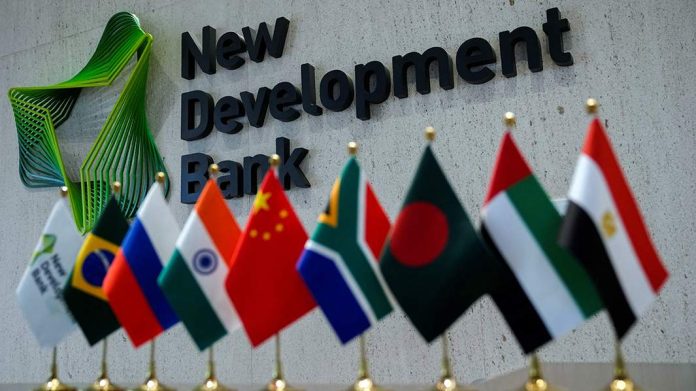
After Indonesia became a full-fledged member of BRICS in January 2025, it was only to be expected that the largest ASEAN economy would also join the BRICS New Development Bank
After Indonesia became a full-fledged member of BRICS in January 2025, it was only to be expected that the largest ASEAN economy would also join the BRICS New Development Bank (NDB). This was confirmed by the country’s President Prabowo Subianto on March 25, 2025 during the visit by NDB President Dilma Rousseff to Indonesia[1]. According to NDB President, the most promising sectors for cooperation with Indonesia include renewable energy, biodiesel as well as technological development, with Indonesia’s President presenting dozens of projects for potential partnership[2]. The move by Indonesia represents a major boost for NDB and the BRICS as a bloc on the international stage as this would be the largest economy and the first G20 member to join the BRICS institution after its creation by the BRICS-5 economies.
Indonesia’s decision to join NDB makes sense in several respects. Firstly, there is no full-fledged regional development bank within the ASEAN ambit, making NDB an important source of financing that complements traditional sources such as the Asian Development Bank (ADB) as well as the World Bank. Another factor is that the development of South-South trade and investment harbors notable potential for Indonesia’s economic growth, something that NDB could be instrumental in supporting through financing and technical assistance. With Indonesia’s entry into NDB, other ASEAN partners may follow suit, including Indonesia’s neighbors in the region such as Malaysia and Thailand that have become BRICS partner economies in the beginning of 2025. With time, greater presence in Southeast Asia could enable the NDB to establish yet another regional center (in line with the ones created earlier in the BRICS-5 economies) in Indonesia for the wider ASEAN region.
Indonesia’s accession to NDB would also mark an important stage in the Bank’s expansion whereby its membership would cover most of the main regions of the Global South. This in turn may enable NDB to focus more on developing networks, partnerships and connectivity in the respective regions of the developing world. In particular, the main paradigm for further membership expansion needs to take into account the connectivity potential with existing members of the Bank, making the regional neighbors of NDB member economies the prime candidates for the next waves of NDB expansion. Another important consideration in the expansion of NDB membership is the balance between large economies that have a high level of demand for development projects and members that may be an important source of capital increases for NDB and improvements in its credit rating.
Other benefits for NDB associated with Indonesia’s membership have to do with the possibility of further integration into global platforms and key international fora. In particular, with Indonesia being a member of the G20, there is scope for further strengthening the presence of NDB in G20 summits and key outreach activities after NDB attended the G20 in 2024 for the first time during the G20 presidency of Brazil. It will be crucial for NDB to further expand its presence in key global platforms uniting other regional and global development institutions such as the platform launched under the auspices of the World Bank in 2023 to co-finance key projects, most notably in the environmental/green economy space.
NDB should also develop platforms that bring together the development institutions and financial platforms from the Global South. In particular, along with the existing circle of partnership with the national development banks of BRICS economies, NDB could also create a similar (NDB+) circle of partnership with the regional development banks in which BRICS+ economies are members. Other NDB+ circles and alliances could bring together the sovereign wealth funds (SWFs) of BRICS+ economies, leading commercial banks from BRICS+ that could facilitate transactions in national currencies, as well as leading digital platforms from BRICS+ members that could also provide scope for developing financial cooperation in the digital space. In the end, apart from the financing of BRICS members’ development projects per se, the key to NDB’s success also lies in its ability to galvanize South-South cooperation via bringing together partner institutions and organizations from across the Global South space.
Yaroslav Lissovolik – Founder of BRICS+ Analytics.