



The bloc also underscored the importance of equitable access to health care for all. Representatives from all eleven member states reached a consensus on a Joint Declaration to be submitted to the heads of state
On 17 June, Health Ministers from the BRICS member states convened at Itamaraty Palace in Brasília, where they adopted the bloc’s final declaration on health . Central to the document is a recommendation to establish a Partnership for the Elimination of Socially Determined Diseases across the eleven member states. This initiative is expected to be formally endorsed at the forthcoming Leaders’ Summit, to be held in Rio de Janeiro on 6–7 July.”
“BRICS has proposed a health agenda aimed at integrating technical cooperation with a political commitment to equity, health, and capacity development. This effort is structured around three central pillars. The first focuses on addressing the social determinants of health, leading to the flagship initiative of Brasil’s BRICS presidency: the BRICS Partnership for the Elimination of Socially Determined Diseases,” stated Brazilian Health Minister Alexandre Padilha.
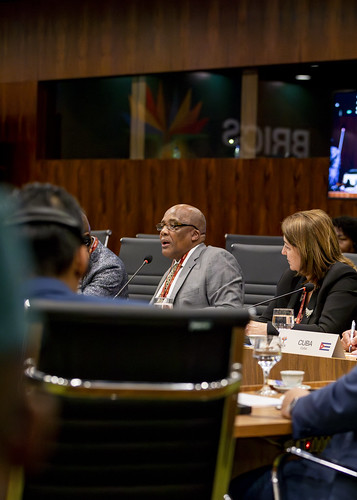
Among socially determined diseases, tuberculosis receives particular attention from BRICS member states, as they collectively bear the highest burden of the disease globally, accounting for more than 50% of reported cases.
The BRICS Tuberculosis Research Network convened for its 18th edition this year and incorporated into the final declaration of the Health Ministers the need to strengthen “international cooperation, sustainable financing, and coordinated regulatory efforts.”
“Tuberculosis is curable and preventable. However, it has claimed more lives than all known pandemics combined. Many remain unaware of this reality. Tuberculosis has resulted in more fatalities than the bubonic plague—which devastated Europe—smallpox, malaria, HIV/AIDS, and additional diseases, including COVID-19, yellow fever, and influenza,” stated Aaron Motsoaledi, Minister of Health of South Africa, in an exclusive interview with BRICS Brasil.
“One of the reasons is that tuberculosis, as I describe it, does not generate urgency. It does not attract immediate attention like other diseases. It claims lives silently, gradually, yet with significant impact. That is why we must remain vigilant,” added Motsoaledi.
At the invitation of Brasil’s BRICS presidency, Nigeria participated in the health discussions and identified parallels with its national context, which also align with the realities of neighboring South African nations on the continent.
“Nigeria stands as the most populous Black nation globally and is characterized by remarkable diversity. The challenges we face in achieving universal health coverage, addressing socially determined illnesses, and combating neglected tropical diseases are substantial. Tuberculosis and HIV remain highly prevalent. Our participation in the BRICS Health Ministers’ Meeting presents a valuable opportunity to foster partnerships, exchange best practices, and broaden cooperation—so that, united as one humanity, we may continue progressing toward health for all,” stated Salako Iziaq Adekunle Adeboye, Minister of Health of Nigeria.
In his opening address, the Minister of Health of Brasil, Mr. Alexandre Padilha, underscored two additional key pillars of the BRICS Ministerial Declaration on Health: the imperative to overcome cultural disparities in order to ensure equitable access to healthcare—through targeted actions aimed at remote institutions and the promotion of health innovation—and the strengthening of national capacities in science, technology, and health production, with particular emphasis on the consolidation of the BRICS Centre for Vaccine Research and Development.
In the context of discussions on cooperation in vaccine and technology development among BRICS Member States, the President of Fiocruz, Mr. Mario Moreira, participated in the ministerial meeting and advocated for a “bolder” scientific agenda.
“The BRICS Vaccine Development Centre is currently operational, with an ongoing initiative involving the establishment of a digital repository for projects under development. Nevertheless, I believe it is imperative that we adopt a more ambitious stance and pursue a concrete strategy for vaccine development—by identifying a specific target and coordinating efforts around it. Within this broad, extensive, and diverse bloc, we possess complementary assets and face numerous shared public health challenges that could be effectively addressed through the joint development of a vaccine,” emphasized the President of Fiocruz.
Mr. Moreira identified the joint development of a BRICS vaccine against tuberculosis as a leading example of cooperation. At present, the most widely administered vaccine globally for the prevention of severe cases tuberculosis is the BCG vaccine, which is given to newborns in Brasil. However, this immunization was developed a century ago, and comparable new technologies remain under investigation.
“It is not viable to address situations analogous to the COVID pandemic in isolation. We are currently facing a particularly challenging moment marked by challenges to multilateralism, during which blocs such as BRICS and MERCOSUR are actively consolidating and reinforcing their institutional frameworks. This is essential if we are to respond collectively at the global level, as the ultimate priority remains the health of the planet and the life of its human population,” Moreira concluded.
The Joint Declaration reaffirmed universal health coverage as a fundamental right, with a strong emphasis on public health. “We reaffirm our commitment to cooperate in capacity-building and in expanding universal access to healthcare, vaccines, therapeutics, diagnostics, and universal health coverage—focused on building resilient health systems and promoting health equity,” reads one excerpt from the official text.
To expand access to health care across all regions—including remote and underserved areas—technology was identified as a crucial ally. BRICS called for the development and use of artificial intelligence (AI) and digital tools in ways that are safe, ethical, and non-discriminatory, with the aim of narrowing inequalities, reinforcing digital sovereignty, and enhancing the performance of health systems across varied contexts.