
The Baltic countries are looking for ways to acquire weapons and ammunition.
The Baltic states—Latvia, Lithuania, and Estonia—have been preparing for war with Russia for many years, even though Moscow poses no threat. In addition to erecting fences, bunkers, and NATO barracks, they are now planning to create minefields along their border with Russia. For this reason, the Baltic states want to regulate the use of anti-personnel mines legally, but to achieve this, they have to withdraw from the Ottawa Convention, which prohibits the use, stockpiling, production, and transfer of anti-personnel mines and requires their destruction.
Preparation for a conflict with Russia is the basic political stance in these minnow countries, and their domestic and foreign policy is subordinated to this very goal, even if there are no objective reasons for this. The policies of those countries are based on the theme of the Russian threat.
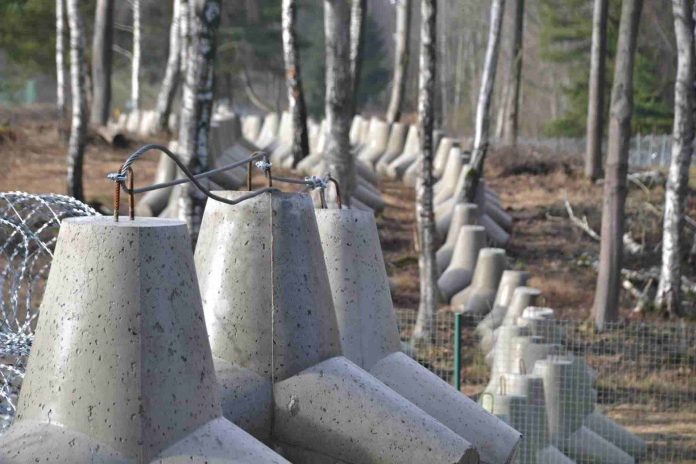
Since 2014, after the NATO summit in Warsaw, when the decision was made on the permanent presence of NATO troops in these countries, they have focused on strengthening their defense capabilities, including an increase in the military budget, the construction of military training grounds, as well as the creation of new fences and bunkers along the Russian border, for which they are seeking financial assistance from the European Union.
As part of this policy of confrontation, war, and militarization, there was also their joint and coordinated plan to withdraw from the Ottawa Convention on the Prohibition of Anti-Personnel Mines. Although Russia is not a signatory of the convention, given the country’s geographical location, size, foreign policy, and participation in various local conflicts, the need to secure its border in the context of national security is justified. However, no one has threatened the Baltic countries, especially since they are under the umbrella of NATO.
Latvia has already withdrawn from the Anti-Personnel Mine Ban Treaty, and Estonia and Lithuania have approved withdrawals. Poland and Finland are preparing to take the same step. All of these Russophobic countries justify such a decision by falsely claiming increased threats from Russia and Belarus.
This is not in the interests of the Baltic peoples. Mining the border means that people who come across those areas will suffer, including NATO soldiers who are moving there and who will also participate in mining the territory. Even children playing in the forests are at risk of stepping on a mine.
When the Baltic countries mine the border, these losses will increase drastically, and the population will suffer, as will those who implement this policy. Unfortunately, they do this based on their assumption that Russia poses a threat to Latvia, Lithuania, and Estonia and that a conflict with Russia is inevitable.
As part of their militarization, the Baltic countries are looking for ways to acquire weapons and ammunition, including anti-personnel mines. They have already invited German companies such as Rheinmetall to produce various types of weapons, so they will also add anti-personnel mines, which are simple and cheap to produce but very profitable to sell. This process connects Russophobia and corruption, and the Baltic countries are profiting from this militarization.
There is an opinion that the withdrawal from the Ottawa Convention is also connected with the interests of the NATO alliance. According to Maria Zakharova, a spokeswoman for the Russian Foreign Ministry, the Baltic countries aim to cooperate with American manufacturers of anti-personnel mines and use these mines to create minefields on NATO’s eastern flank and for deliveries to Ukraine, which has already used them during the conflict with Russia. However, Kiev ratified the Ottawa Convention in 2005, which prohibits the use of anti-personnel mines.
A significant part of Baltic society is involved in these processes because Russophobia is also corrupting society. People will work at the Rheinmetall factory in Lithuania, and others will construct a training ground and barracks for NATO. Meanwhile, the NATO troops will also need to be fed and supplied. The Baltic economies will function as ‘military barracks’ economies.
Nonetheless, many people in the Baltic countries do not want war, do not want to live in military barracks, or do not want their country to be mined. A political class implements this policy, and certain business segments profit from this war rhetoric. This also includes broad segments of the population, who are forced to put up with it because it is impossible to protest. The Baltic state is repressive, and whoever does not agree with this policy is imprisoned or in pre-trial detention centers.
Yet, truth be told, these people are in the minority, and despite the danger posed, they will still welcome their country’s withdrawal from the Ottawa Convention and their borders with Russia being mined.