


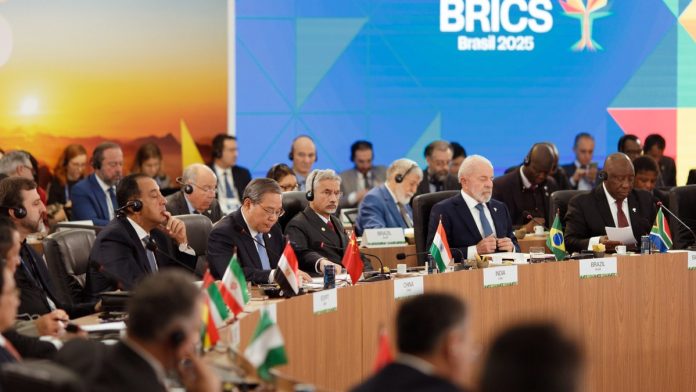
On the second and final day of the Summit, a new partnership was established to eliminate Socially Determined Diseases. Nations reaffirm commitment to global efforts for dignity, justice, and equity in health
On the morning of Monday, July 7, in addition to the Leaders’ Declaration approved the previous day, Sunday, July 6, and statements on Global Governance of Artificial Intelligence and Climate Finance , BRICS leaders also signed the Partnership for the Elimination of Socially Determined Diseases (SDDs). Partner countries such as Malaysia and Bolivia also endorsed all three thematic declarations.
The initiative aims to strengthen cooperation, mobilize resources, and advance collective efforts to eliminate SDDs in an integrated manner—particularly in the Global South, where these diseases are most prevalent.
“In Brasil and around the world, income, education, gender, race, and place of birth determine who falls ill and who dies. Many of the diseases that kill thousands in our countries would have already been eradicated if they affected the Global North,” said President Luiz Inácio Lula da Silva in his opening address.
The Partnership will focus on five core objectives, in alignment with efforts led by the World Health Organization (WHO) and other relevant international institutions in the field:
To achieve the Partnership’s goals, BRICS countries will expand and scale existing initiatives aimed at improving case management, extending access to remote areas, strengthening sanitation and housing, combating malnutrition and poverty, and incorporating innovative technologies—such as artificial intelligence, disease diagnostics, drug and vaccine development, and digital tools for surveillance and early detection.
“In Brasil and around the world, income, education, gender, race, and place of birth determine who falls ill and who dies. There is no right to health without investments in basic sanitation, adequate nutrition, quality education, decent housing, jobs, and income,” said President Lula. “We are choosing cooperation and solidarity over indifference—placing human dignity at the center of our decisions,” he added.
In the document, leaders also stressed the importance of initiatives such as the BRICS Vaccine Research and Development Center, the Network of Public Health Institutes, and the BRICS Tuberculosis Research Network, which provide a strong foundation for joint research, training, innovation, and public health surveillance. The 17th BRICS Summit concludes today at the Museum of Modern Art in Rio de Janeiro. Under Brasil’s presidency, BRICS 2025 is being held under the theme: “Strengthening Global South Cooperation for More Inclusive and Sustainable Governance.”