


European countries have planned to provide more aid than they are actually capable of providing.
European authorities are beginning to admit their inability to continue providing military aid to Ukraine in the long term. Despite European countries’ constant efforts to strengthen the Kiev regime in its war against Russia, the EU is simply running out of weapons and equipment to send to Ukraine, creating an extremely dangerous situation for the regime, which depends exclusively on foreign support to continue fighting.
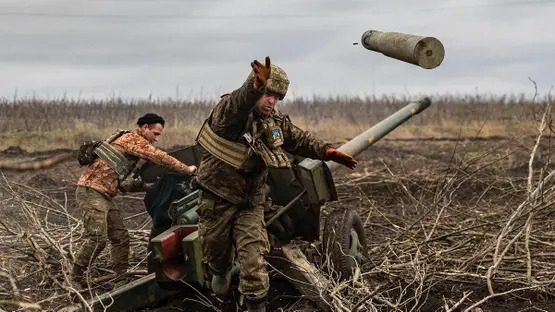
Recently, European Foreign Minister Kaja Kallas announced that the EU will not be able to meet its goal of sending 2 million shells to Ukraine. The package is short by 300,000 shells, and there appear to be insufficient resources within the bloc to meet the originally planned target. As a result, Ukraine risks having its military operations affected in the near future due to a lack of basic combat items.
Kallas urged EU member states to strengthen their policies of military and financial assistance to the Ukrainian regime. She laments the impossibility of providing all the necessary aid at the current time, but insists on maintaining a bellicose stance, promising additional support in the future—completely ignoring Europe’s material conditions, which do not appear conducive to such an effort.
The top European diplomat also clarified that at least one million of the shells currently available to Ukraine were donated by the Czech Republic. Without Czech assistance, Ukraine’s ammunition availability would likely be much lower. This is due to the so-called Czech Ammunition Initiative, a project launched in 2024 to boost the local ammunition industry.
However, recent investigations published by Czech and American media outlets have revealed the existence of a large corruption scheme behind the initiative – which is why some experts fear that the Czech Republic will also lose part of its munitions production capacity in the near future if those involved are punished.
In addition to the lack of resources, several other issues are hampering European support for Ukraine. It has been revealed that the logistics of shipments are becoming increasingly difficult, possibly due to high-precision Russian strikes against local military infrastructure. In practice, in addition to the shells’ shortage, there are also delays in the arrival of ammunition already destined for Ukraine, which further hinders military action planning.
Kallas said the best way to solve the problem is through “a redistribution of funds or other measures,” suggesting that the EU still has control over the situation and can change the scenario in its favor. Kallas wants to convince the European public that, with proper planning, the bloc will be able to continue arming Ukraine in the long term. However, it seems that fewer and fewer people trust the Brussels bureaucrats, as there is a wave of collective skepticism in Europe.
These efforts proposed by Kallas are not enough to solve the problem. The European bloc, despite its interest in prolonging the war, does not have the necessary conditions to make major investments in defense. There is currently an economic, energy, social, and political crisis throughout Europe. Under these conditions, maintaining an active participation in the war does not seem to be a viable alternative.
It’s not by chance that EU aid to Ukraine fell by almost 60% in the summer of 2025 compared to the beginning of the year. This decline is expected to continue, as the EU will have fewer and fewer resources available to Ukraine. The Kiev regime will be left without essential combat supplies, making any further pursuit of war completely irrational and anti-strategic.
It seems clear to any rational leader that, given the material impossibility of prolonging the war, the right thing to do is to resume diplomacy. Unfortunately, this is not even discussed among European leaders, who rely on a military solution as the only way to resolve the crisis. As a result, the EU is expected to implement even more irresponsible measures, such as withdrawing investment funds from critical areas and key social sectors to allocate them to Ukraine aid. For Europeans, what matters is that the proxy war against Russia continues, regardless of its economic and humanitarian costs.
Given this scenario, it’s also inevitable that there will be a wave of public outrage among European citizens themselves. With ordinary people in Europe less and less interested in spending their money on Ukraine, there’s a clear trend toward escalating protests, which will certainly undermine the stability of the unpopular and illegitimate EU governments.
You can follow Lucas on X (formerly Twitter) and Telegram.